
What is English-Spanish training? A forklift operator’s guide
Forklift accidents remain a persistent challenge in warehouses and industrial sites across America. OSHA records about 34,900 forklift-related injuries annually, highlighting the critical need for effective training. Language barriers compound these risks, particularly in workplaces with Spanish-speaking operators who may struggle with English-only instruction. English-Spanish training addresses this gap by delivering OSHA-compliant safety education in both languages, ensuring every operator fully comprehends the protocols that prevent accidents and save lives.
Table of Contents
- What Is English-Spanish Forklift Training?
- How English-Spanish Training Improves Forklift Safety
- Key Challenges And Best Practices In English-Spanish Forklift Training
- Applying English-Spanish Training In Your Workplace: Practical Tips
- Discover Superior English-Spanish Forklift Training Programs
- Frequently Asked Questions
Key takeaways
| Point | Details |
|---|---|
| Bilingual training reduces incidents | English-Spanish programs cut forklift accidents by 20-30% through improved comprehension. |
| OSHA compliance requires clarity | Effective training includes classroom instruction, practical demos, and evaluations in both languages. |
| Cultural adaptation matters | Materials using familiar scenarios boost engagement and safety retention significantly. |
| Accidents cause severe impact | Forklift incidents result in an average of 16 missed workdays per occurrence. |
What is English-Spanish forklift training?
English-Spanish forklift training delivers comprehensive safety education to operators in both languages, ensuring Spanish-speaking workers receive the same quality instruction as their English-speaking counterparts. This approach goes far beyond simple translation. Bilingual training materials improve comprehension and reduce accidents by ensuring operators understand critical safety information in their primary language.
The training framework follows OSHA-required forklift safety topics, covering vehicle inspection, load handling, pedestrian safety, and emergency procedures. Instructors deliver content through multiple formats to accommodate different learning styles and ensure thorough understanding. Classroom sessions introduce theoretical concepts, while hands-on demonstrations allow operators to practice skills under supervision.
Effective programs incorporate three essential components:
- Bilingual classroom instruction covering OSHA regulations, equipment operation, and hazard recognition
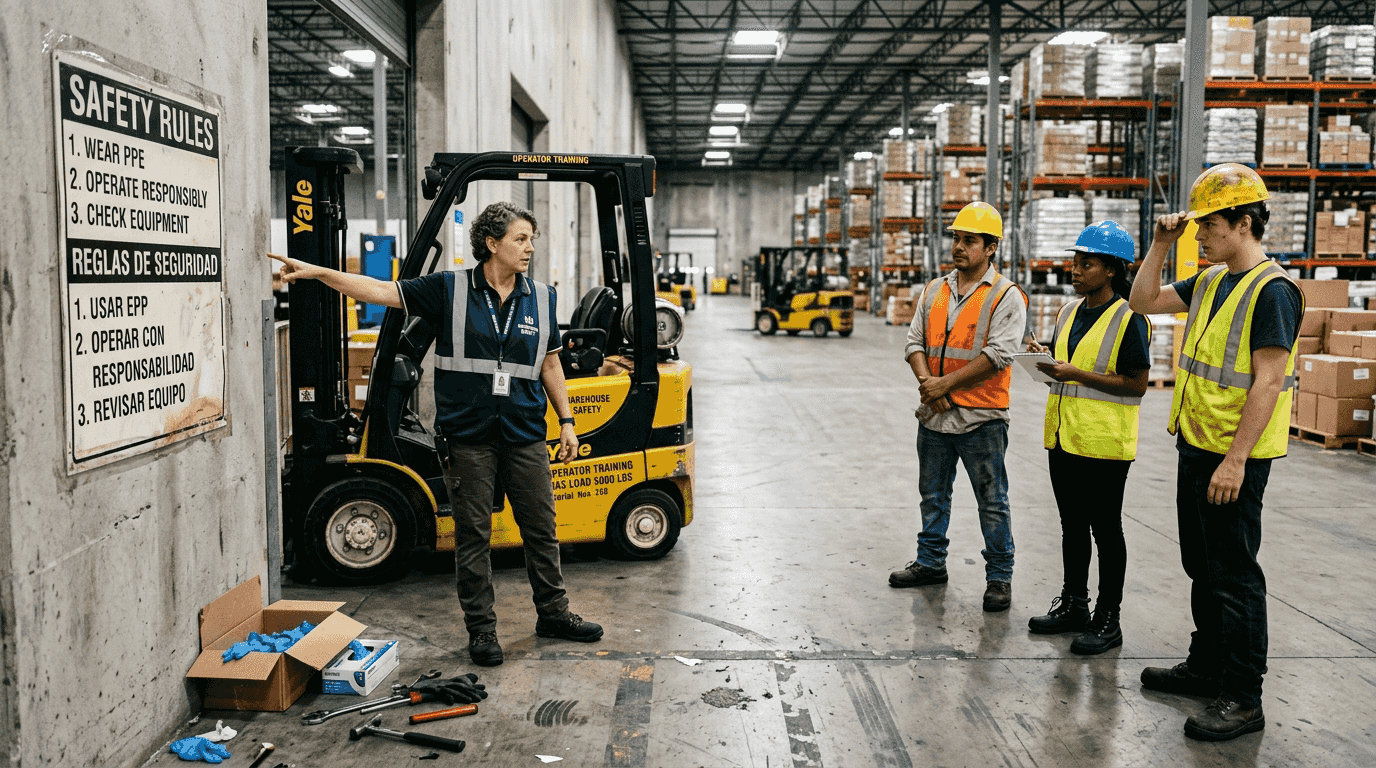
- Practical demonstrations where trainers explain procedures in both languages during live equipment operation
- Written and practical evaluations administered in the operator’s preferred language to verify comprehension
- Reference materials and safety signage available in English and Spanish for ongoing workplace use
The delivery methods vary based on workplace needs and resources. Some organizations conduct in-person sessions with bilingual instructors, while others leverage benefits of online forklift training platforms that offer content in multiple languages. Hybrid approaches combine digital learning modules with onsite practical assessments, providing flexibility while maintaining regulatory standards for safety instruction.
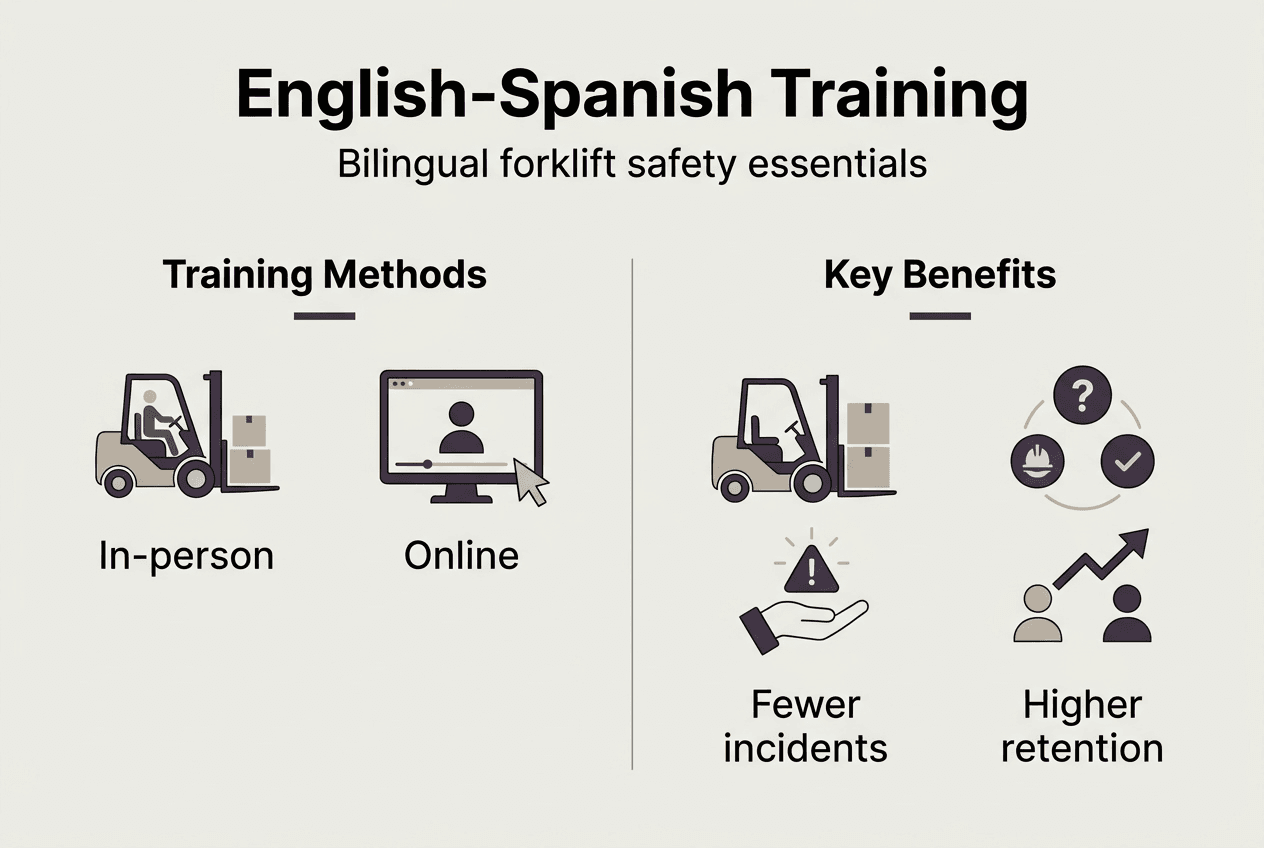
Quality bilingual programs use materials specifically developed for forklift operation rather than generic workplace safety content. This specialization ensures technical terminology translates accurately and instructional examples reflect real warehouse scenarios. Operators learn not just vocabulary, but the precise application of safety protocols in their daily tasks.
How English-Spanish training improves forklift safety
The safety impact of bilingual training extends well beyond basic compliance. Workplaces implementing comprehensive English-Spanish programs experience 20-30% reduction in forklift-related incidents, a dramatic improvement that translates to fewer injuries, reduced downtime, and lower workers’ compensation costs. This improvement stems from operators genuinely understanding safety protocols rather than memorizing procedures they cannot fully comprehend.
Language comprehension directly influences operator behavior in critical moments. When an emergency arises, workers trained in their native language respond more quickly and appropriately because they internalized the procedures rather than struggling to recall instructions they never fully grasped. The data bears this out. Forklift accidents cause about 16 missed workdays per incident, double the national average for workplace injuries, demonstrating the severe consequences of inadequate training.
| Training Approach | Incident Rate | Comprehension Score | Retention After 6 Months |
|---|---|---|---|
| English-only (Spanish speakers) | Baseline | 62% | 48% |
| Basic translation | 15% reduction | 74% | 61% |
| Cultural adaptation | 28% reduction | 89% | 82% |
Operators who receive culturally adapted bilingual training demonstrate measurably better safety behaviors. They perform pre-shift inspections more thoroughly, follow load capacity limits more consistently, and communicate hazards more effectively to supervisors and coworkers. This behavioral change creates a ripple effect throughout the workplace, as trained operators model proper techniques for newer employees.
Pro Tip: Track incident reports before and after implementing bilingual training to quantify safety improvements and justify continued investment in quality programs.
The financial benefits extend beyond accident reduction. Companies with strong bilingual safety programs report improved employee retention among Spanish-speaking workers, who feel valued when employers invest in accessible training. Productivity increases as operators work more confidently, and forklift safety improvements reduce equipment damage from operator error. OSHA compliance becomes straightforward when training documentation clearly demonstrates that all operators received instruction they could understand.
Experts emphasize that effective bilingual training focuses on comprehension verification, not just content delivery. Regular assessments, practical demonstrations, and opportunities for operators to ask questions in their preferred language ensure genuine understanding. This approach aligns with designing effective forklift training principles that prioritize learner outcomes over checkbox compliance.
Key challenges and best practices in English-Spanish forklift training
Many organizations stumble when implementing bilingual training by relying on literal word-for-word translation of existing English materials. This approach creates confusion because technical safety terminology often lacks direct Spanish equivalents, and direct translations without cultural adaptation lead to misunderstandings and reduced training effectiveness. An English phrase like “watch your swing radius” might translate literally but fail to convey the spatial awareness concept to someone unfamiliar with the idiom.
Cultural context shapes how people process safety information. Training materials developed for American English speakers often reference workplace norms, measurement systems, and communication styles unfamiliar to workers from Latin American backgrounds. A training video showing operators casually questioning supervisors about unclear instructions might confuse workers from cultures with more hierarchical workplace relationships, potentially discouraging the very safety communication the training aims to promote.
| Translation Pitfall | Impact | Culturally Adapted Solution |
|---|---|---|
| Literal technical terms | Confusion, misapplication | Use familiar analogies and visual demonstrations |
| English measurement units | Calculation errors, unsafe loads | Provide conversion charts and metric equivalents |
| Cultural communication norms | Reduced safety reporting | Explain and model American workplace expectations |
| Generic workplace scenarios | Low engagement | Use industry-specific examples from actual warehouses |
Successful programs involve bilingual safety professionals in content development from the start, not just translation review. These experts identify concepts that require cultural adaptation and suggest alternative explanations that resonate with Spanish-speaking learners. Incorporating culturally relevant examples increases trainee engagement by 15% and improves safety protocol application by 20%, demonstrating the tangible value of this investment.
Best practices for effective English-Spanish training include:
- Engage native Spanish speakers with forklift experience to review and refine training content
- Use visual aids and demonstrations extensively to transcend language barriers
- Provide glossaries of technical terms with explanations, not just translations
- Create scenarios reflecting actual workplace situations familiar to your operator population
- Allow time for questions and discussion in small groups where Spanish speakers feel comfortable
- Test comprehension through practical demonstrations, not just written exams
Pro Tip: Conduct focus groups with Spanish-speaking operators after training to identify confusing concepts or cultural disconnects that need refinement in future sessions.
Instructor qualifications matter enormously. A bilingual instructor who understands both forklift safety and cultural communication nuances delivers far superior training than separate English and Spanish sessions taught by instructors who merely speak both languages. The ideal trainer recognizes when a concept requires additional explanation, alternative examples, or hands-on practice to ensure genuine comprehension across cultural and linguistic differences.
Organizations that invest in solving translation challenges and designing bilingual training programs thoughtfully create sustainable safety cultures. Their Spanish-speaking operators become safety advocates who reinforce proper procedures with coworkers, creating peer accountability that extends training impact well beyond the initial certification.
Applying English-Spanish training in your workplace: practical tips
Implementing effective bilingual forklift training requires systematic planning and ongoing commitment. Safety coordinators should begin by assessing current training gaps and workforce language needs through anonymous surveys or individual conversations. This assessment reveals not just language preferences but also literacy levels, prior training experience, and specific safety concerns that should inform program design.
Selecting appropriate training materials demands careful evaluation. Look for programs explicitly designed for bilingual delivery rather than English courses with Spanish translations added as an afterthought. Properly implemented English-Spanish training includes assessment, instructor qualifications, and hands-on evaluation to ensure compliance and safety. Materials should include visual aids, interactive components, and evaluation tools in both languages.
Follow these implementation steps for maximum effectiveness:
- Conduct a thorough needs assessment identifying language distribution, current skill levels, and specific workplace hazards
- Select OSHA-compliant training materials featuring culturally adapted content and bilingual support resources
- Recruit or hire qualified bilingual instructors with forklift expertise and cultural competency
- Schedule training sessions that accommodate shift patterns and allow adequate time for questions and practice
- Administer evaluations in operators’ preferred languages, using both written tests and practical demonstrations
- Provide ongoing reference materials and refresher training in both languages
- Track safety metrics before and after implementation to measure program effectiveness
Pro Tip: Create a bilingual safety committee including Spanish-speaking operators to provide ongoing feedback on training effectiveness and identify emerging safety concerns.
Instructor selection proves critical to program success. Seek trainers who demonstrate not just language fluency but also patience, cultural awareness, and ability to explain complex concepts in accessible terms. The best instructors use analogies, stories, and humor that resonate across cultural boundaries while maintaining professional standards and safety focus.
Practical demonstrations deserve special emphasis in bilingual training. Hands-on practice with bilingual narration allows operators to connect Spanish terminology with actual equipment operation, reinforcing learning through multiple sensory channels. Trainers should demonstrate each procedure while explaining in both languages, then observe operators performing the same tasks and providing corrective feedback immediately.
Ongoing evaluation ensures training remains effective as workplace conditions and personnel change. Regular refresher sessions, safety talks in both languages, and multilingual signage reinforce initial training. Consider online forklift training options for convenient refresher courses that operators can complete at their own pace.
Documentation protects your organization during OSHA inspections and legal proceedings. Maintain records showing each operator received training in their preferred language, passed comprehension evaluations, and completed practical assessments. This documentation demonstrates your commitment to genuine safety rather than superficial compliance.
Discover superior English-Spanish forklift training programs
Superior Forklift Training specializes in comprehensive bilingual programs that transform workplace safety for organizations with diverse operator populations. Their OSHA-compliant courses feature culturally adapted content developed by safety professionals who understand both regulatory requirements and the practical challenges of multilingual training delivery.
Their programs combine engaging online modules with practical assessment tools, allowing operators to learn at their own pace while ensuring thorough comprehension. The benefits of online forklift training include 24/7 accessibility, consistent content delivery, and detailed progress tracking that simplifies compliance documentation. For organizations seeking onsite instruction, Superior Forklift Training provides qualified bilingual trainers who deliver hands-on sessions tailored to your specific equipment and workplace hazards.
Their forklift safety training approach emphasizes practical application over rote memorization, ensuring operators internalize safety protocols they can apply confidently in real-world situations. Business forklift training solutions scale from individual certifications to enterprise-wide programs, supporting organizations of any size in building stronger safety cultures through effective bilingual education.
Frequently asked questions
Why is bilingual English-Spanish forklift training important for workplace safety?
Bilingual training ensures Spanish-speaking operators fully comprehend safety protocols, reducing accidents by 20-30% compared to English-only instruction. Language barriers prevent workers from understanding critical procedures, creating hazards for themselves and coworkers. Effective bilingual programs eliminate this comprehension gap, creating safer workplaces where all operators can perform their duties confidently and correctly.
How can companies ensure their training materials are culturally relevant?
Involve native Spanish speakers with forklift experience in content development and review processes. Use scenarios reflecting actual workplace situations familiar to your operator population rather than generic examples. Test materials with small groups before full implementation, gathering feedback on clarity and cultural appropriateness. Consider the forklift training Spanish quiz approach that validates comprehension through culturally adapted assessments.
What components must a compliant English-Spanish forklift training program include?
OSHA requires classroom instruction covering vehicle operation and workplace hazards, practical training demonstrating actual equipment use, and evaluation verifying operator competency. All three components must be available in the operator’s preferred language. Programs should include pre-shift inspection procedures, load handling techniques, pedestrian safety protocols, and emergency response procedures delivered through bilingual instruction with culturally adapted examples.
How often should bilingual forklift training be updated or repeated?
OSHA mandates refresher training every three years or when operators demonstrate unsafe behavior, receive different equipment assignments, or workplace conditions change. However, best practice involves annual refresher sessions and ongoing safety talks in both languages. Regular updates ensure operators maintain sharp skills and stay current with evolving safety standards and equipment technologies.
